What do international experts advise on Varroa?

2025-02-03T14:05:05+11:00Managing your hives, Pests and diseases, Varroa|

Researchers working on the AgriFutures Australia funded project Resilient beekeeping in the face of Varroa surveyed 164 international experts, from across the honey bee and pollination industry, seeking advice on varroa. Experts included beekeepers, researchers, apiary officers, and policy analysts from 21 countries around the world (Figure 1). Figure 1. Position held by respondents Key findings The key findings are outlined below. Education is the most important factor in slowing the spread of varroa. In-person training and field days ranked highest in providing education about varroa. Hive movement restrictions and avoidance of mass pollination events also ranked highly in slowing the spread. The most effective means of preventing reinfestation after treatment or management are maintaining low infestation levels [...]
Chemical free management of Varroa: brood breaks and drone trapping

2025-02-24T15:03:40+11:00Managing your hives, Pests and diseases, Varroa|

Many beekeepers will be wondering how to best manage varroa in their hives. A well equipped Integrated Pest Management (IPM) tool kit will comprise of cultural and chemical measures to be employed based on colony infestation thresholds. While chemicals are useful in certain situations, such as high mite loads that are a product of natural population growth, or to prevent re-infestation from other colonies in the area, long term varroa control isn’t limited to pesticides. In fact, there are several beekeeping techniques that, if employed regularly, can help keep mite populations below a lethal level. With a bit of practice, these techniques can become a part of a beekeeper’s usual routine. The mite spends most of its life within brood [...]

Integrated pest management for Varroa

2025-02-24T15:03:46+11:00Agrichemicals, Managing your hives, Pests and diseases, Varroa|

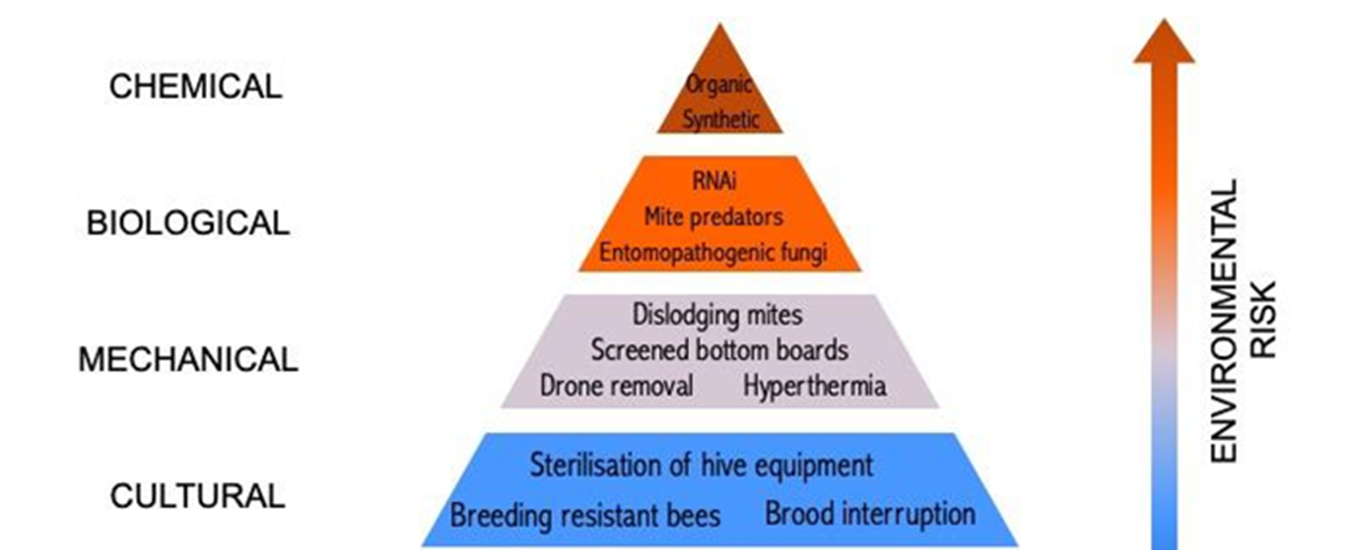
With Varroa now on our shores, Australian beekeepers have a steep learning curve to understand how to live with the mite. Fortunately, beekeepers worldwide have been living with Varroa for decades, there are many treatment and management strategies that can help beekeeping businesses to continue to flourish. As with all pest management, it’s important industry and government recommendations are followed, ensuring an approach that will be of the greatest benefit to Australia's honey bee industry. Implementing  integrated pest management (IPM) strategies from the very beginning will ensure beekeepers maximise bee health while minimising the impact of Varroa. IPM is a sustainable approach to pest management that aims to reduces costs, labour, effects on bees, and residues in hive products, allowing [...]

Does Australia have Varroa mite predators?

2022-11-04T15:46:47+11:00Biosecurity, Managing your hives, Pests and diseases|

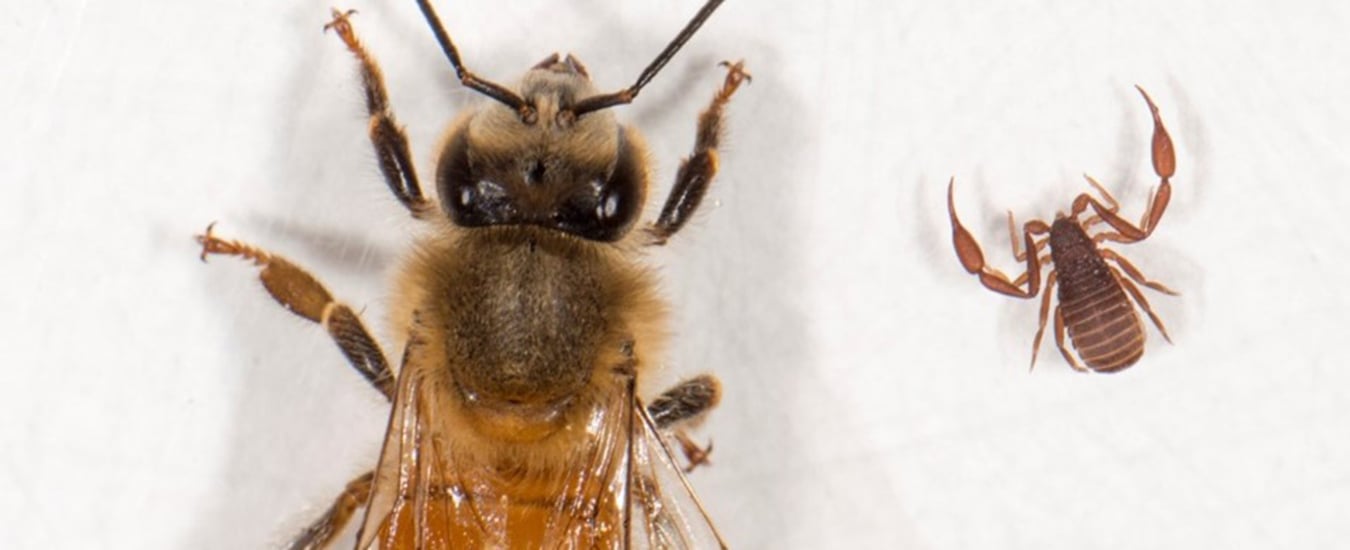
Do our bees have useful associates that attack Varroa mites? – you can help. Above: A honey bee next to an adult Chelifer cancroides (pseudoscorpion). Image courtesy Robert Lamberts, PFR With the threat of Varroa mite looming large, it might be helpful to see what defences our bees may have in or around their hives. Overseas where insecticide resistance in Varroa mite is a concern, researchers have been testing Varroa mite predators that are compatible with bees. One candidate is the pseudoscorpion Chelifer cancroides. This critter has been studied by New Zealand bio-protection researcher with beekeeping experience, Ron van Toor (Plant & Food Research, NZ (PFR)). The pseudoscorpion isn’t an actual scorpion (it has no sting) but it [...]

Go to Top