Have your say on beekeeper education

2026-06-04T10:50:50+10:00Training & resources|

The cost-shared Varroa Transition to Management (T2M) program will be winding up over the next few months. Beekeepers will continue to be supported via their state or territory departments. The education needs of beekeepers are likely to vary based on: their experience presence of Varroa size of their operation, and their hive products and services. T2M is running a survey to assess the education needs of different sectors of the beekeeping industry. This information will be provided to state departments to help them support you better. Have your say! The survey is non-identifiable and voluntary. It takes only a couple of minutes to complete. Please share your views on which resources will make a difference to you at Post T2M [...]
Snapshot of Western Australian beekeeping industry

2023-10-12T08:55:37+11:00Beekeeping on public land, Honey, Pollination|

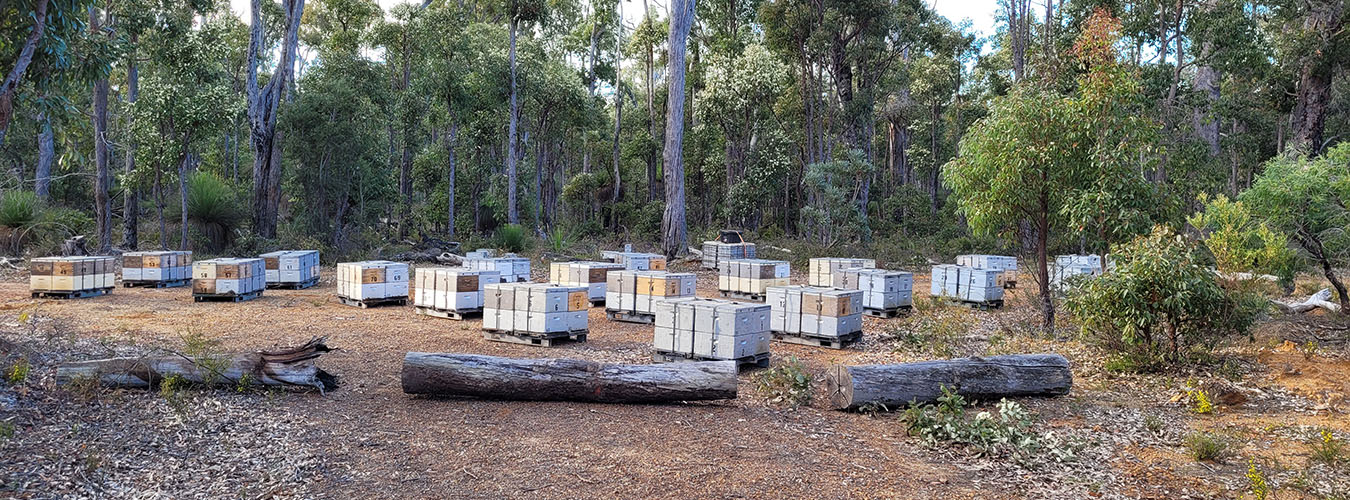
Researchers from the University of Western Australia conducted a survey in 2020-21 to value bush apiary sites in the southwestern area of the state and provide economic data on the industry. The paper is publicly available and provides a wealth of insight into the industry that will be important for demonstrating the impact of government decisions on the beekeeping and pollination-dependent industries. Commercial bee sites On average commercial beekeepers used 12 sites. The most common reason for not using a site they had access to was because there was no nectar flow (77%). This was followed by fire (44%), they had access to better sites (33%), and that logging had occurred at the site  (23%). Sites managed by the Department [...]

Plan Bee pollination webinar

2022-06-15T16:27:41+10:00Agrichemicals, Biosecurity, Managing your hives, Nutrition, Pests and diseases, Plan Bee, Pollination|

The economic value of honey bees in Australia was AU$8.35-19.97 billion in 2015 (Karasińki 2018). Much of this value comes from pollination of 53 agricultural crops. Pollination can improve both the yield and the quality of produce, and 35 Australian industries are dependent on honey bees, with others benefiting from them. One of the aims of Plan Bee, Australia’s honey bee genetic improvement program, is to survey the needs of beekeepers and growers. While we believe that breeding can make a huge difference to our industries, it can’t solve all our problems – we need to better manage our resources and relationships. Plan Bee is working towards the provision of quality bees and a strong beekeeping industry, a common goal [...]

What is a breeding objective?

2022-06-08T10:47:05+10:00Breeding, Plan Bee|

Plan Bee is Australia’s honey bee genetic improvement program. Any bee breeder can participate. They have control over their breeding objectives. They can have a different breeding objective for different stock. What is a breeding objective? A breeding objective includes: The traits to be selected Which direction you want to select each trait for Whether traits are treated equally, or more weight is given to some traits and less to others Traits There are a large number of traits that Australian beekeepers are interested in. Honey production is considered the most important trait (Table 1).  Table 1. Relative importance (%) of traits to recreational/semi-commercial (<200 colonies), commercial (200-800 colonies), and large commercial (>800 colonies) beekeepers. Cells are coded based on [...]

Help us improve pollination

2021-09-03T13:11:42+10:00Agrichemicals, Breeding, Plan Bee, Pollination|

Australia’s honey bee genetic improvement program (Plan Bee) seeks to breed honey bees with traits that benefit both beekeepers and growers. However, the program recognises that humans have a large role to play in pollination. How our crops and bees are managed has repercussions that affect both honey bees and the industries that depend on them.  The Plan Bee team are therefore seeking insights from the avocado, almond and blueberry industries to understand the challenges affecting pollination services, and the opportunities where Plan Bee can help overcome existing issues. How you can help If you are a grower or a beekeeper working on these crops you can participate in this project using the links below:  Survey for growers: https://redcap.sydney.edu.au/surveys/?s=JT3JDL9PNR Survey [...]

Have your say on queen breeding

2020-09-18T13:48:55+10:00Breeding, Managing your hives, Pests and diseases, Plan Bee|

If Australia is going to have a prosperous honey bee industry, then queen quality and breeding is going to be very important to make sure our bees are at their best. In preparation for a new breeding program we asked beekeepers what they think.  Two surveys were undertaken in 2018 to assess beekeepers’ and queen producers’ attitudes around queen production and purchase, and also toward a proposed queen bee breeding program.  The survey found that  59% of beekeepers are unhappy with the amount of information available when purchasing queens 65% are happy with the quality of the queens they purchase Issues around time and money versus the price of queens deter queen producers from performing more selection Beekeepers pointed to [...]

Go to Top