Who is Professional Beekeepers for?

2023-11-02T12:16:45+11:00Agrichemicals, Beekeeping on public land, Biosecurity, Breeding, Code of Practice, Disaster relief, Genetics, Honey, Managing your hives, Nutrition, Pests and diseases, Plan Bee, Policy and compliance, Pollination, Registration, Training & resources|

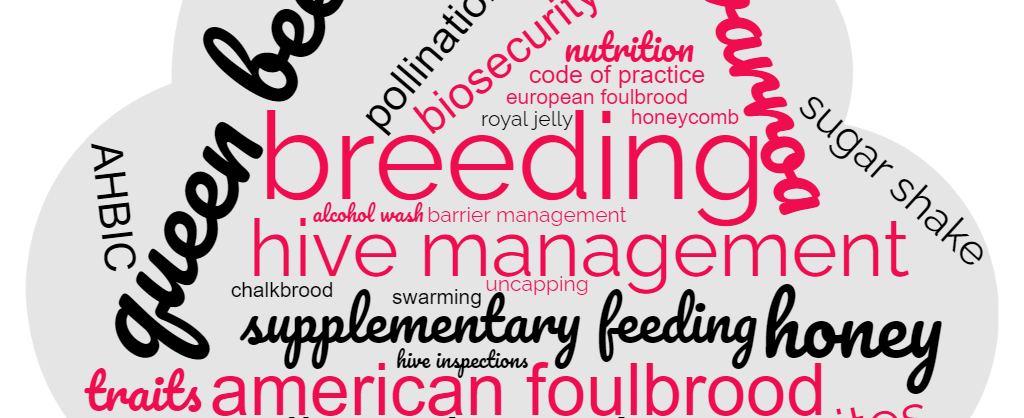
The Professional Beekeepers Community of Practice has been established to meet the needs of rural and regional Australians for the extension of beekeeping knowledge and to promote collaboration on important issues to commercial beekeeping. In short, we provide expert knowledge for a resilient beekeeping community.  Anyone can be a professional beekeeper. You can be a commercial beekeeper or a recreational beekeeper. To be a professional beekeeper you should: Register your hives Follow the Bee Biosecurity Code of Practice Be trained in the detection of pests and diseases Our articles are written and reviewed by experts in beekeeping and/or research, including beekeepers, researchers, bee biosecurity officers and trainers. We cover a wide range of topics and provide research updates, best practice, [...]
Update on Plan Bee genetic testing: getting good quality DNA

2023-03-30T11:56:57+11:00Breeding, Genetics, Plan Bee|

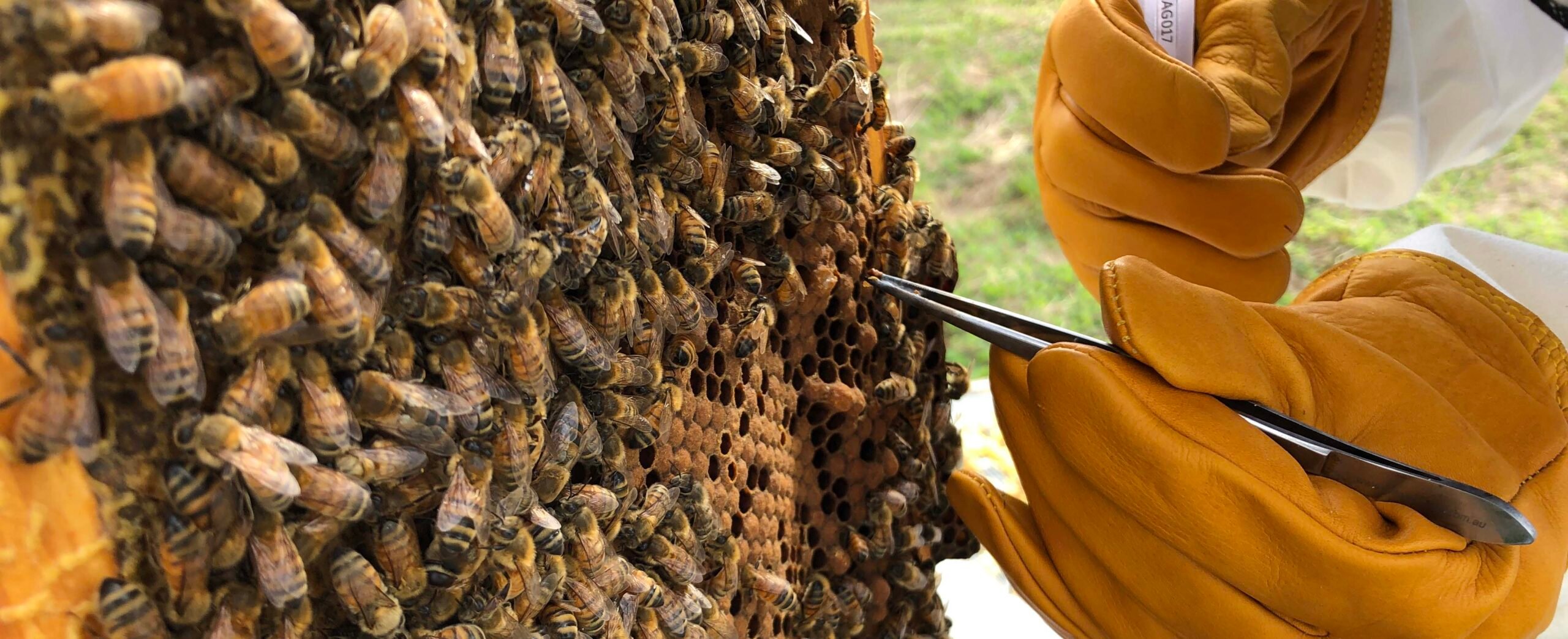
Plan Bee aims to produce Estimated Breeding Values that will give an indication of how a queen performs for a trait in comparison to other queens due to her genetic makeup. This requires that colonies be evaluated for traits and that we either have a pedigree or can work out relationships from genetic testing. Genetic testing is better than pedigree because we know the relatedness, e.g. which queens are half-sisters and which are full-sisters. This improves the accuracy of the Estimated Breeding Values resulting in a faster rate of selection for the traits that you want to improve. Plan Bee has been working with bee breeders in New South Wales, Victoria, Tasmania, South Australia, Western Australia and Queensland to collect [...]

2022 Plan Bee Survey results: breeding objectives

2023-02-22T13:58:58+11:00Breeding, Genetics, Pests and diseases, Plan Bee|

Plan Bee, Australia’s national honey bee genetic improvement program conducts an annual survey of beekeepers and breeders to determine attitudes and opinions surrounding honey bee genetics. This annual survey is a crucial activity as it helps guide Plan Bee, ensuring that the needs of the industry are well understood, and that the future direction of the project is aligned to the future of the industry.  In 2022 82 beekeepers gave ‘weights’ to their breeding objectives. For example, they allocated 60% to honey production and 40% to temperament. Honey production (33%) and temperament (23%), were the most sought after traits, just as they were in 2021 (Figure 1). However, since 2021, the weighting of these two traits has increased even further. [...]

Plan Bee evaluations: what colonies, traits, and when?

2022-12-22T13:34:07+11:00Breeding, Code of Practice, Pests and diseases, Plan Bee, Uncategorized|

Plan Bee is Australia’s honey bee genetic improvement program.  Participating bee breeders will perform colony evaluations and submit the data to the database. Once there is enough data in the database for a trait we will be able to calculate Estimated Breeding Values (EBVs). EBVs give the genetic merit of the queen compared to the population. Breeders can use EBVs to choose which queens to use to produce the next generation and to advertise their stock to their customers. Customers could then use this information to select which breeder queen they would like to buy progeny from. How many colonies and which ones? When recording colonies, you should aim to record all the colonies that are being managed together in [...]

Update on Plan Bee genetic testing

2022-12-09T11:34:19+11:00Breeding, Genetics, Plan Bee|

Free genetic testing is being offered to Australian queen bee breeders. We sincerely thank everyone who has responded by providing samples or requested assistance to collect data for the database and samples for genetic testing. Getting good quality DNA for genetic testing has been an ongoing problem and is leading to delays in testing. So, what are we doing about it? We have been investigating different options for DNA extraction. The new method is much more expensive, more than four times the price of the old method. That will mean that we can test fewer samples. We aim to find a less expensive solution without compromising on quality. Currently we are investigating if more mature samples provide better quality DNA, [...]

2021 Plan Bee survey

2022-11-18T17:48:41+11:00Breeding, Pests and diseases, Plan Bee, Pollination|

In 2021, 109 beekeepers responded to a survey about queen replacement strategies, satisfaction with purchased queens, trait desirability, and attitudes to the Plan Bee honey bee genetic improvement program. Plan Bee has the support of the majority of beekeepers surveyed, with 73% agreeing that modern breeding techniques will improve program success, and 94% seeing the value of the program. Queens are the most important individual in the colony. Replacing underperforming queens is important for productivity, diseases, and temperament. More than 40% of beekeepers replace queens as needed. Almost 60% of large commercial beekeepers, and 50% of commercial beekeepers replace their queens every year. Recreational and semi-commercial beekeepers have more varied strategies. Being cranky is the most common reason a queen [...]

Plan Bee queen distribution

2022-10-26T13:58:43+11:00Plan Bee|

Tocal queens Plan Bee established a research and development population at Tocal Agricultural College. Queens were donated by Australian bee breeders and bees by NSW beekeepers (Better Bees WA Inc, Casey Cooper, CSIRO/AQBBA, Corinne Jordan, Horner family, Jamie Baggs, Jon Lockwood and Mark Caguioa, Malcolm Porter, Ray Hull, Stephens family, Steven Targett, Terry Brown and Roxanna Stutz, Trevor Bain, Vicki Gow). Plan Bee is immensely grateful for these donations particularly at a time when beekeepers were facing drought and bushfire. So far only a small number (63) of queens have been distributed (artificially inseminated, natural mated, and queen cells). These queens have gone to registered beekeepers with a primary production business, proof that they produce queens for sale, and who [...]

What does Plan Bee need to produce EBVs?

2022-10-11T16:16:30+11:00Breeding, Plan Bee|

Plan Bee is Australia’s honey bee genetic improvement program. This will provide bee breeders with Estimated Breeding Values (EBVs), a tool to aid with the selection of queens to breed the next generation from. The variation in performance (phenotype) between colonies reflects the environment and genetics. Different traits vary in how much they are affected by each of these (Figure 1). Breeding can act only on the portion of variation that is due to genetics. Figure 1. Performance (phenotype) is determined by genetics and the environment. In this example chalkbrood (left) and hygienic behaviour (right) are both partially controlled by genetics. However, genes have a greater effect on chalkbrood than on hygienic behaviour in this example Whilst differences [...]

What difference does animal breeding make?

2022-08-04T11:10:39+10:00Breeding, Genetics, Plan Bee|

A breeding program for Apis mellifera carnica has been ongoing in Germany since the 1970s, expanding into surrounding countries. From 1970-1989 the program increased honey production by 0.11% and gentleness by 0.01% per annum (Table 1). Table 1. Rate of genetic improvement per year before (1970-1989) and after (2014-2018) implementation of modern animal breeding techniques (EBVs). Hoppe et al 2020. In the mid 1990s the program implemented the use of modern animal breeding techniques - computer based Best Linear Unbiased Predictions (BLUP) which take information on traits, genetics (pedigree or genetic testing), and environment (i.e. which animals are kept together in the same environment) to produce Estimated Breeding Values (EBVs). EBVs assign a number to each individual that [...]

What is a breeding objective?

2022-06-08T10:47:05+10:00Breeding, Plan Bee|

Plan Bee is Australia’s honey bee genetic improvement program. Any bee breeder can participate. They have control over their breeding objectives. They can have a different breeding objective for different stock. What is a breeding objective? A breeding objective includes: The traits to be selected Which direction you want to select each trait for Whether traits are treated equally, or more weight is given to some traits and less to others Traits There are a large number of traits that Australian beekeepers are interested in. Honey production is considered the most important trait (Table 1).  Table 1. Relative importance (%) of traits to recreational/semi-commercial (<200 colonies), commercial (200-800 colonies), and large commercial (>800 colonies) beekeepers. Cells are coded based on [...]

Go to Top