Who is Professional Beekeepers for?

2023-11-02T12:16:45+11:00Agrichemicals, Beekeeping on public land, Biosecurity, Breeding, Code of Practice, Disaster relief, Genetics, Honey, Managing your hives, Nutrition, Pests and diseases, Plan Bee, Policy and compliance, Pollination, Registration, Training & resources|

The Professional Beekeepers Community of Practice has been established to meet the needs of rural and regional Australians for the extension of beekeeping knowledge and to promote collaboration on important issues to commercial beekeeping. In short, we provide expert knowledge for a resilient beekeeping community.  Anyone can be a professional beekeeper. You can be a commercial beekeeper or a recreational beekeeper. To be a professional beekeeper you should: Register your hives Follow the Bee Biosecurity Code of Practice Be trained in the detection of pests and diseases Our articles are written and reviewed by experts in beekeeping and/or research, including beekeepers, researchers, bee biosecurity officers and trainers. We cover a wide range of topics and provide research updates, best practice, [...]
2022 Plan Bee Survey results: breeding objectives

2023-02-22T13:58:58+11:00Breeding, Genetics, Pests and diseases, Plan Bee|

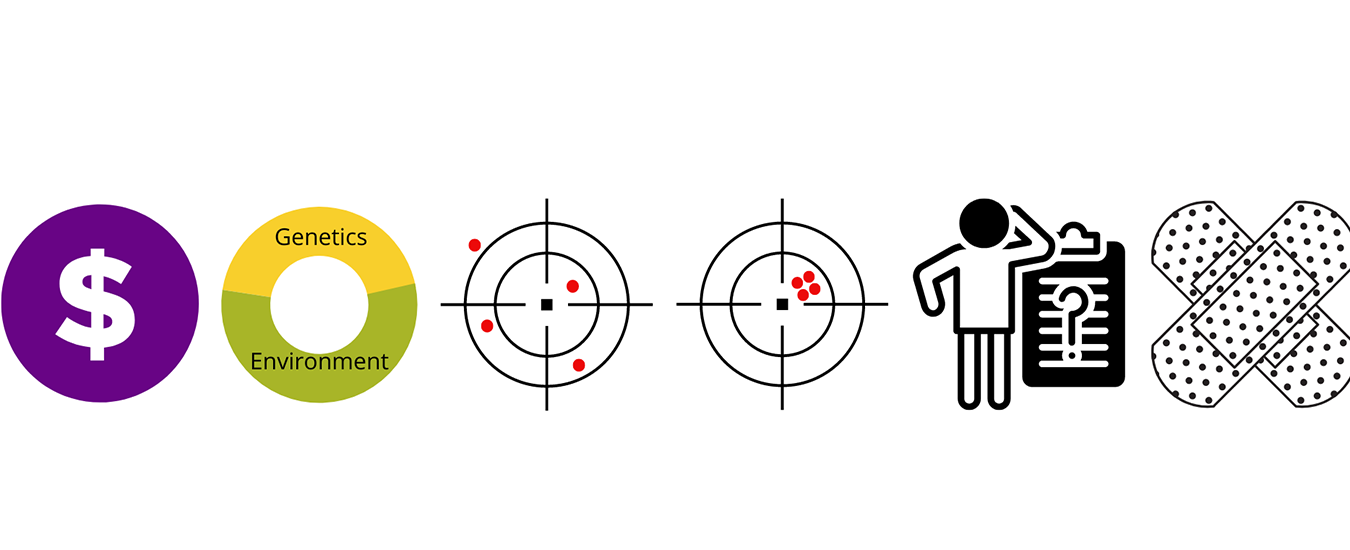
Plan Bee, Australia’s national honey bee genetic improvement program conducts an annual survey of beekeepers and breeders to determine attitudes and opinions surrounding honey bee genetics. This annual survey is a crucial activity as it helps guide Plan Bee, ensuring that the needs of the industry are well understood, and that the future direction of the project is aligned to the future of the industry.  In 2022 82 beekeepers gave ‘weights’ to their breeding objectives. For example, they allocated 60% to honey production and 40% to temperament. Honey production (33%) and temperament (23%), were the most sought after traits, just as they were in 2021 (Figure 1). However, since 2021, the weighting of these two traits has increased even further. [...]

What makes an effective target for selection

2023-01-11T14:12:50+11:00Breeding, Plan Bee|

There are countless traits that beekeepers may be interested in selecting for, however, not all these traits are actually effective targets for selection. There are 6 criteria to determine whether a trait is a good candidate for selection in a breeding program (Figure 1). This is important because it’s critical that you are spending time evaluating colonies for traits that will actually result in genetic improvement for economically important traits. By economic you may think we mean things that generate income (e.g. honey), however they can also save money (e.g. low disease) or simply make colonies easier to work with (e.g. low aggression). 1) The trait(s) are economically important Figure 1. Traits must have value for beekeepers. This may [...]

What is the size of Australia’s queen bee industry?

2022-12-20T15:59:05+11:00Plan Bee|

A great beekeeping business depends on great colonies, and having great colonies depends on having queens. Therefore, you could view queen breeders as the backbone of our industry. Based on surveys of queen replacement strategies (Chapman & Frost 2021, Gibbs & Muirhead 1998), Clarke & Le Feuvre estimate that the queen bee industry is worth $6.8 million and packaged bees $3.5 million per year. This estimate comes from the number of registered hives in Australia, how often the average beekeeper replaces their queens, and the proportion of queens that beekepers buy. However,  the true value of queen breeding and production is unknown as it has been estimated indirectly from surveys on a small sample of Australian beekeepers. What is needed [...]

Update on Plan Bee genetic testing

2022-12-09T11:34:19+11:00Breeding, Genetics, Plan Bee|

Free genetic testing is being offered to Australian queen bee breeders. We sincerely thank everyone who has responded by providing samples or requested assistance to collect data for the database and samples for genetic testing. Getting good quality DNA for genetic testing has been an ongoing problem and is leading to delays in testing. So, what are we doing about it? We have been investigating different options for DNA extraction. The new method is much more expensive, more than four times the price of the old method. That will mean that we can test fewer samples. We aim to find a less expensive solution without compromising on quality. Currently we are investigating if more mature samples provide better quality DNA, [...]

2021 Plan Bee survey

2022-11-18T17:48:41+11:00Breeding, Pests and diseases, Plan Bee, Pollination|

In 2021, 109 beekeepers responded to a survey about queen replacement strategies, satisfaction with purchased queens, trait desirability, and attitudes to the Plan Bee honey bee genetic improvement program. Plan Bee has the support of the majority of beekeepers surveyed, with 73% agreeing that modern breeding techniques will improve program success, and 94% seeing the value of the program. Queens are the most important individual in the colony. Replacing underperforming queens is important for productivity, diseases, and temperament. More than 40% of beekeepers replace queens as needed. Almost 60% of large commercial beekeepers, and 50% of commercial beekeepers replace their queens every year. Recreational and semi-commercial beekeepers have more varied strategies. Being cranky is the most common reason a queen [...]

Plan Bee queen distribution

2022-10-26T13:58:43+11:00Plan Bee|

Tocal queens Plan Bee established a research and development population at Tocal Agricultural College. Queens were donated by Australian bee breeders and bees by NSW beekeepers (Better Bees WA Inc, Casey Cooper, CSIRO/AQBBA, Corinne Jordan, Horner family, Jamie Baggs, Jon Lockwood and Mark Caguioa, Malcolm Porter, Ray Hull, Stephens family, Steven Targett, Terry Brown and Roxanna Stutz, Trevor Bain, Vicki Gow). Plan Bee is immensely grateful for these donations particularly at a time when beekeepers were facing drought and bushfire. So far only a small number (63) of queens have been distributed (artificially inseminated, natural mated, and queen cells). These queens have gone to registered beekeepers with a primary production business, proof that they produce queens for sale, and who [...]

How do I take samples for Plan Bee?

2022-07-04T12:18:41+10:00Breeding, Genetics, Plan Bee|

Our national honey bee genetic improvement program, Plan Bee, is offering free genetic testing to bee breeders who are collecting performance data. This includes not only commercial queen breeders, but also those who breed queens for themselves.  What does sampling for genetic testing entail? What do you collect? There are several options, which will give us the data we need. In order of preference these are: 6 drone pupae 6 large drone larvae Less than 6 drone pupae or large larvae 1 worker pupae 1 large worker larvae We’ve found that the closer the bee is to emergence the better the quality of the DNA we get. If using larvae, we ask for larger larvae as we need a certain [...]

What should you ask your bee breeder?

2022-06-07T09:29:48+10:00Breeding, Pests and diseases, Plan Bee, Registration|

Good queens are important to ensure productivity and ease of management. Our national honey bee genetic improvement program, Plan Bee, will lead to improvements in bee breeding and our bees. But how do you ensure you’re getting good queens? There are some things you can ask your queen breeder: What cycle length do they use? Queens that are left in colonies for longer before sale have better survival rates. Those sold at either 21 or 28 days old are more likely to be alive after 2 weeks and 15 weeks than those caught at 14 days old. When are queens available? This depends on the business, mainly where they are located. The queen rearing season is longer in warmer climates. [...]

A look into the sex-determining gene in Australian honey bees

2022-06-01T14:35:47+10:00Breeding, Genetics, Plan Bee|

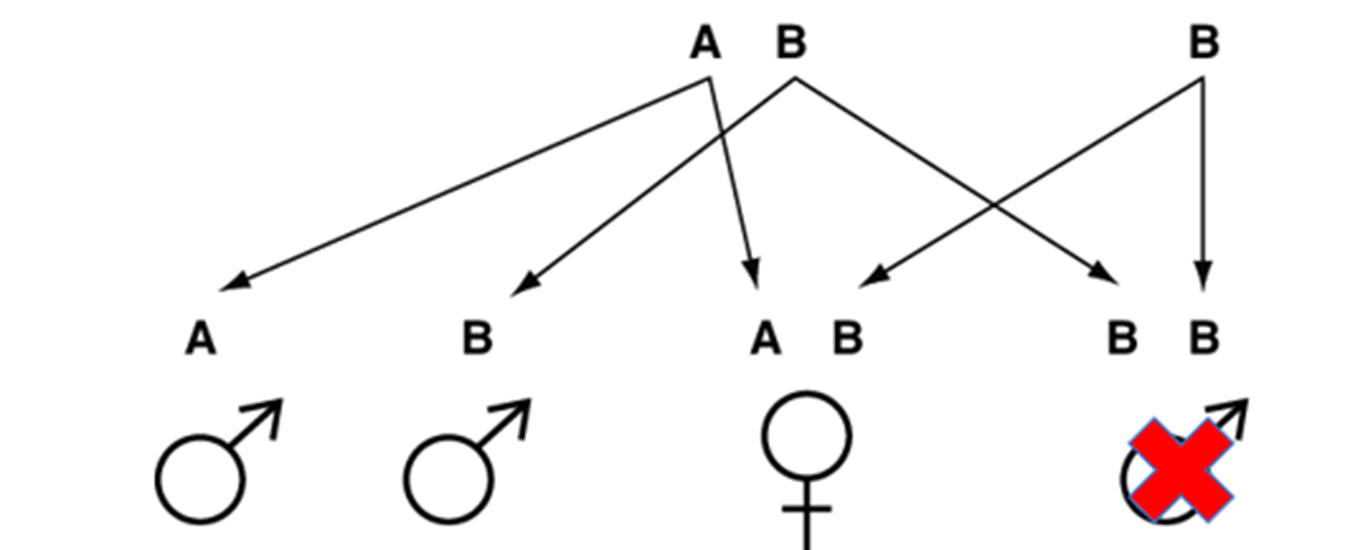
What is the complementary sex determiner and why does it matter? Sex in honey bees is determined by a gene named the complementary sex determiner (csd). Unfertilised eggs emerge to become drones, whilst fertilised eggs become queen and worker bees. Like other genes, csd has numerous alleles. Alleles are different variations of the same gene. A queen bee has two chromosomes, each carrying a different csd allele. As drones emerge from unfertilised eggs, they only carry one csd allele from their queen mother. Worker bees will carry one of their queen mother’s allele and a different allele from their drone father.  With this system, it is possible that some fertilised eggs end up with the same csd allele from both [...]

Go to Top