About ruthluckner

This author has not yet filled in any details.
So far ruthluckner has created 148 blog entries.

What do international experts advise on Varroa?

2025-02-03T14:05:05+11:00Managing your hives, Pests and diseases, Varroa|

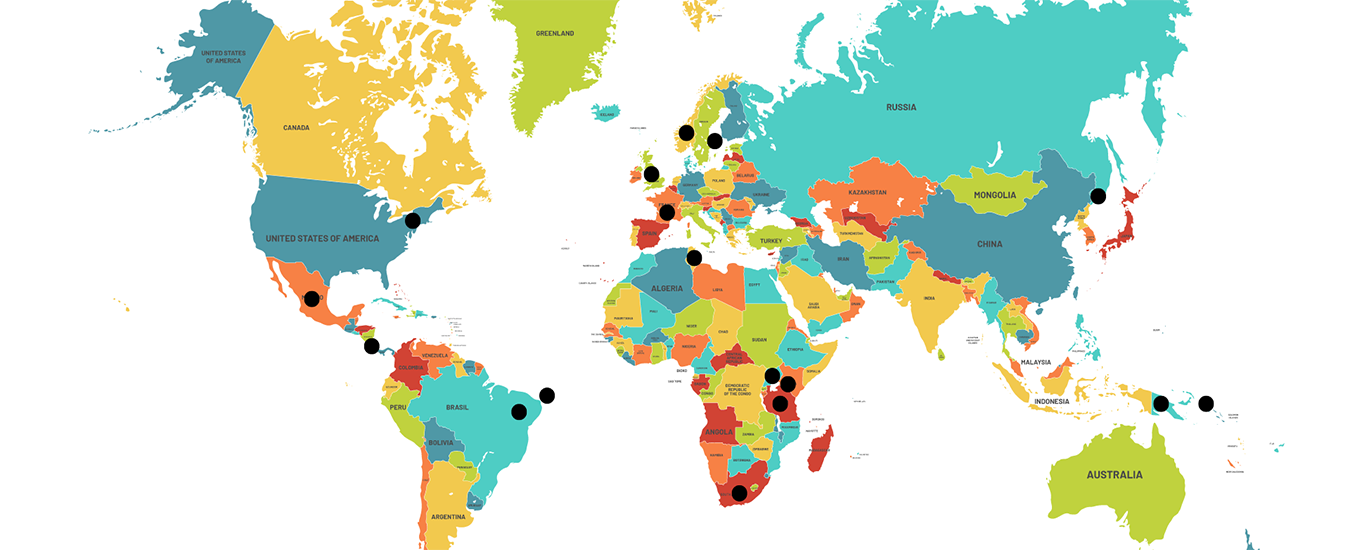
Researchers working on the AgriFutures Australia funded project Resilient beekeeping in the face of Varroa surveyed 164 international experts, from across the honey bee and pollination industry, seeking advice on varroa. Experts included beekeepers, researchers, apiary officers, and policy analysts from 21 countries around the world (Figure 1). Figure 1. Position held by respondents Key findings The key findings are outlined below. Education is the most important factor in slowing the spread of varroa. In-person training and field days ranked highest in providing education about varroa. Hive movement restrictions and avoidance of mass pollination events also ranked highly in slowing the spread. The most effective means of preventing reinfestation after treatment or management are maintaining low infestation levels [...]

Varroa resistance: what trait/s should you focus on?

2025-02-24T15:02:15+11:00Breeding, Pests and diseases, Plan Bee, Varroa|

We’re all worried about what varroa means for beekeeping in the future. There is no doubt that things will change. Imagine living with varroa without putting chemicals into hives that can harm bees, honey, wax, people, and beekeepers' wallets. Through breeding, this can be a reality. Honey bees have natural defences to keep varroa populations below economic thresholds before chemical treatment is necessary. By breeding queens and drones from well performing colonies that keep mite populations low, varroa resistance in commercial stocks can be developed. But without focused selective breeding, beekeepers are locked on the ever dangerous ‘chemical treadmill’ which only creates more virulent mites and associated viruses, ultimately doing more harm than good. Professional Beekeepers has provided a series [...]

How can pollination dependent industries help with varroa?

2025-02-24T15:02:22+11:00Nutrition, Pests and diseases, Pollination, Varroa|

Pollination-dependent industries play an important role in honey bee health. While this may not be directly linked to varroa management, growers can take steps to improve the health of the bees on their properties. This will in turn make these colonies and the honey bee industry as a whole more resilient to varroa. If varroa results in the loss of feral bee colonies that provide free pollination services this will become even more important for businesses that benefit from pollination. Growers can improve bee health on their properties in several ways: Practice integrated pest management (IPM) A major goal of Integrated Pest Management (IPM) is to limit use of synthetic chemicals in agricultural systems. Growers of pollinator-reliant crops should also [...]

Naturally varroa surviving populations

2025-02-24T15:02:29+11:00Breeding, Pests and diseases, Varroa|

The Australian Government predicted that 50-60% of beekeepers, mostly recreational and small commercial, would leave the industry should varroa become established in Australian honey bee colonies, and that there would be a small decrease (less than 5%) in the number of hives kept by large commercial beekeepers. Based on data from the United States and Europe they predicted that 95—100% of the feral population would die within four years of an area getting varroa. The difference in the rate of colony death between feral and managed populations is due to managed hives being treated for varroa. Resistance means the bee population keeps mite numbers low. Tolerance means the mite population may be higher, but the population does not suffer ill [...]

Varroa resistance: low mite population growth

2025-02-24T15:02:39+11:00Breeding, Pests and diseases, Plan Bee, Varroa|

Selecting colonies with low mite population (LMP) or reduced mite population growth (MPG) to breed from will result in decreased mite loads. Measurement is quick and simple to perform and will be part of every beekeepers’ toolkit: alcohol or soapy water washes. Selecting for low infestation will promote all traits that keep varroa populations low, even those that we do not know about (Figure 1). MPG has been strongly linked with increased colony survival. LMP involves measuring the trait once, while MPG involves multiple measurements. MPG will provide more accurate results and more effective breeding. MPG is more reliable, as it ensures mite populations remain low over time rather than being a once-off test. Figure 1. Varroa resistance traits [...]

Chemical treatments for varroa – synthetic or naturally derived?

2025-02-24T15:02:45+11:00Agrichemicals, Managing your hives, Pests and diseases, Varroa|

When managing hives that are carrying varroa, it is inevitable that beekeepers will, at some point, have to use chemical treatments. But where possible, treatment with chemicals should be avoided and a range of non-chemical treatments and practices employed — as part of an integrated pest management (IPM) strategy — to keep mite infestation below a level that becomes detrimental to the bees. Chemical treatments for varroa fall into two broad categories — synthetic and naturally derived (also known as non-synthetic or organic). There are advantages and disadvantages to both categories. It is important that safety guidelines are adhered to when using chemical treatments. Both synthetic and naturally derived acaricides can be harmful to bees and humans if used incorrectly. [...]

Varroa resistance: mite non reproduction and varroa sensitive hygiene

2025-02-24T15:02:53+11:00Breeding, Pests and diseases, Varroa|

Mite non reproduction (MNR) or suppressed mite reproduction (SMR) is a suite of traits, and factors, that work together to limit successful mite reproduction. Some bee specific traits can be selected individually, such as Varroa sensitive hygiene (VSH),  recapping (REC), and hygienic behaviour (HYB) (Figure 1). However, by focussing on singular traits, we fail to recognise and promote all the mechanisms that honey bees have to keep mites from reproducing in their colonies. MNR also includes mite specific factors and traits that limit reproduction (e.g. infertile males). When quantifying MNR it’s important to remember that this trait is a product of the actions of both the bees (suppressed mite reproduction) and the mites themselves (inability to reproduce). Figure 1. [...]

Breeding for virus resistance

2025-02-24T15:03:01+11:00Breeding, Pests and diseases, Varroa|

As worried as we may be of varroa, deformed wing virus (DWV) and other varroa associated viruses are the true killer. Australia doesn’t have DWV virus at present, and we hope it stays that way. Suppressed in ovo virus infection Researchers internationally have been focusing on how to reduce the chances of queens transmitting varroa associated viruses to her offspring. DWV is present at high levels in the reproductive organs of queens, but some queens suppress some virus infections and lay virus-free eggs. This trait is called ‘suppressed in ovo virus infection’ (SOV). The queen passes this trait on to her offspring, and it is something that can be selected for in breeding programs. SOV is measured by collecting 10 [...]

Varroa and viruses

2025-02-24T15:03:07+11:00Biosecurity, Pests and diseases, Varroa|

Viruses are common in honey bee colonies but tend to exist as covert infections with only sporadic disease outbreaks. The emergence and global spread of varroa mites has drastically changed the impact of viruses by creating a new transmission pathway and exacerbating virus replication in colonies. Three virus complexes in particular have become serious pathogens in association with varroa: Deformed wing virus A and B (DWV-A and DWV-B), the Acute, Israeli and Kashmir bee paralysis virus (ABPV, IAPV and KBV), and Slow bee paralysis virus strains (SBPV) (de Miranda et al. 2010, McMenamin and Genersch 2015). These viruses are vectored by varroa as they parasitise bee pupae, significantly increasing brood mortality or reducing the lifespan of emerging bees. There is [...]

New tools for selecting varroa resistant bees: unhealthy brood odour and varroa volatiles

2025-02-24T15:03:16+11:00Breeding, Pests and diseases, Varroa|

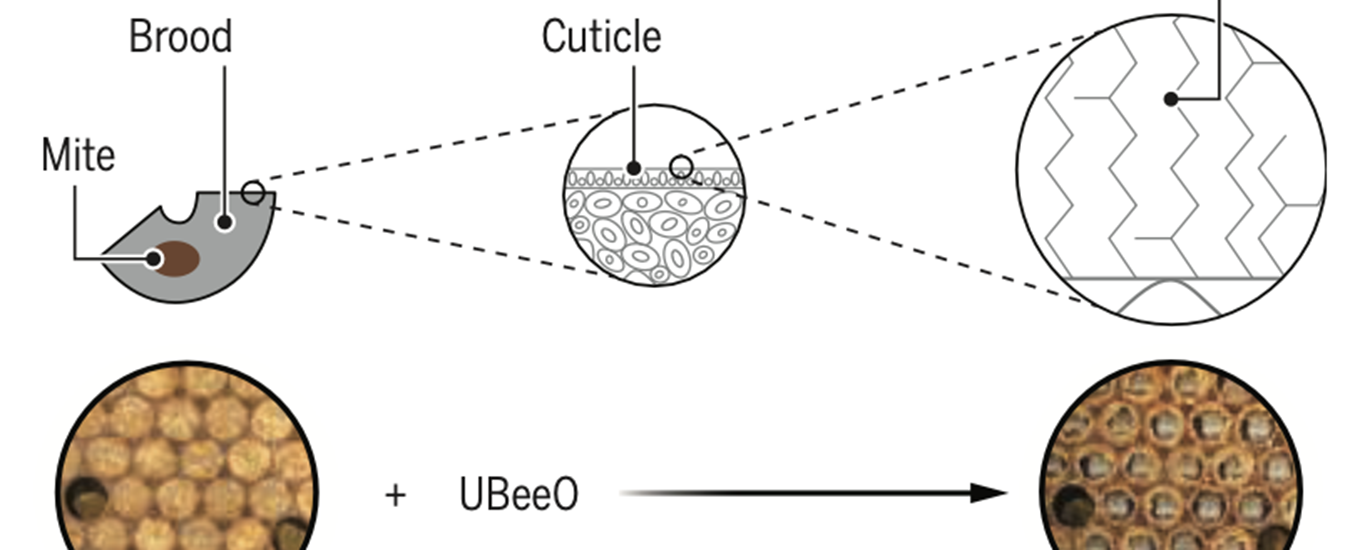
Varroa Sensitive Hygiene (VSH) occurs when workers recognise that the brood has been infested with varroa and uncap the cell. They may then recap the cell or remove the parasitised brood from the cell. Uncapping and recapping can be enough to disrupt the varroa brood cycle, but removal of infected pupae will definitely reduce mite population growth. VSH is one trait that has been selected for in varroa resistance breeding programs. Although breeding for VSH occurs around the world, there is yet to be a globally adopted protocol for selection. The selection assays are time consuming and laborious, hindering wide-scale uptake of this important trait. The trade-off between cost to perform the selection assay and commercial benefit of developing varroa [...]

Go to Top