Old comb = a less productive colony

2023-11-02T16:02:05+11:00Managing your hives, Pests and diseases|

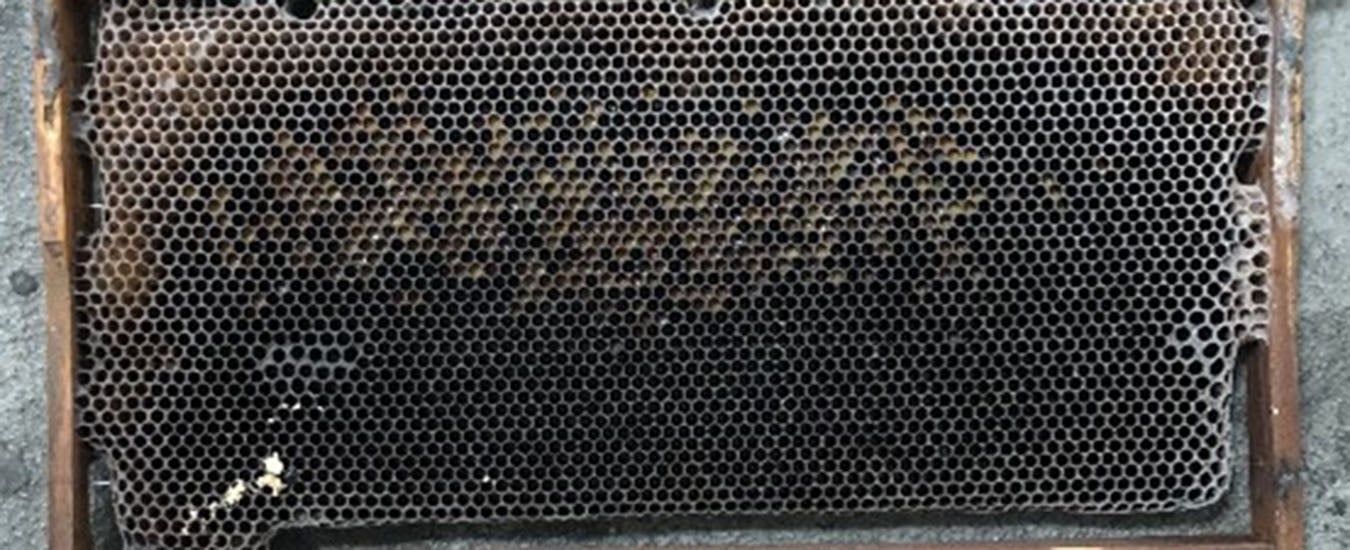
Replacing old comb can seem like a time-consuming task, but it will not only decrease the risk of disease and accumulated toxins but significantly increase the productivity of your hive! Hives with combs replaced regularly (every 1-3 years) store significantly more pollen, produce far more honey and rear more worker brood.    Honey bee colonies in the wild  Honey bee colonies in the wild have a natural way of recycling old comb.  On average a colony can survive for about 6 years in the wild (Seeley, 1978). Any wax or honey comb that is left behind is removed and “cleaned up” by wax moths, mice, beetles and other scavengers, leaving an empty cavity free of contaminated old comb for the next [...]

La Niña and the honey bee

2022-05-09T11:59:01+10:00Managing your hives, Nutrition|

In Australia’s extreme conditions, honey bee hives may require nutritional management when quality nectar and pollen aren’t readily available within a few kilometres of the hive. La Niña conditions continue to prove challenging for humans and hives alike. Starvation can affect hives at any time of the season if nectar isn’t available and malnutrition can happen even if nectar is in abundance, but pollen is of poor quality or low in quantity. So, what’s a beekeeper to do? Many beekeepers in areas with intense and prolonged rainfall have had to consider supplemental feeding their hives in order to keep them healthy and prevent starvation. Remember, if it’s raining, honey bees are staying home and eating their reserves, taking care of [...]

Can we use pollen to identify authentic Australian honey?

2021-02-08T09:37:52+11:00Honey|

Honey counterfeiting is a big issue. It can take two forms. One is adding cheap substances such as corn syrup or sugar syrup to dilute the honey and increase profit margins. The other is mislabelling the origin of the honey, to profit on the good reputation of honey produced by certain countries. Both types of counterfeiting damage Australia’s honey industry and make it difficult for Australian beekeepers to compete with these counterfeit products.  An AgriFutures Australia study (Dawes & Dall 2016) analysed five Jarrah (Eucalyptus marginata), Red Stringybark (Eucalyptus macrorhyncha), Spotted Gum (Corymbia maculata) and Yellow Box (Eucalyptus melliodora) honeys against European standards for pollen content. Currently there is no Australian database. The study found that the European standards for [...]

Nutrition for honey bees

2020-09-18T13:52:02+10:00Managing your hives, Nutrition|

Honey bees eat nectar (carbohydrates) and pollen (protein). Simple. But we can make it more complex: amino acids, fats, minerals and vitamins. Carbohydrates Colonies will perish within days if they do not have carbohydrates to consume. The biggest contributing factor to honey bee colony losses in winter is a lack of carbohydrates - either honey or sugar supplements. Lack of nectar will increase aggression and decrease brood rearing, pollen foraging and hygienic behaviour.  Protein The amount of protein required depends on the season, the climate and the plant species available in the area. The amount of protein in pollen is important. Pollens can be graded on the crude protein proportion they contain. A poor-quality pollen has a crude protein proportion [...]

To feed or not to feed? Part 2. The importance of nutrition to disease

2020-09-18T14:04:37+10:00Managing your hives, Nutrition, Pests and diseases|

Honey bee populations have declined in many parts of the globe, with pests and diseases being a major cause. An Agrifutures Australia project, led by John Roberts at CSIRO, recently investigated the effects of nutrition in autumn on colony pathogen loads of Nosema, Black queen cell virus and Sacbrood virus in late winter in South Australia. Previous work has shown that feeding pollen supplements during winter may increase levels of Nosema in colonies, and that the species of forage available in winter may influence Nosema levels. Therefore, current recommendations are to give colonies good pollen access in autumn to support overwintering and reduce Nosema infection levels.  The current study aimed to test this recommendation by feeding 900g of pollen to [...]

“Honey and Pollen Flora of South-Eastern Australia” – read all about it

2020-09-18T13:58:45+10:00Beekeeping on public land, Honey, Managing your hives, Nutrition, Pollination|

Honey and Pollen Flora of South-Eastern Australia is a long-awaited publication written by Dr. Doug Somerville, Technical Specialist, Bees with the NSW Department of Primary Industries. This book focuses on the value of key plants to nectar-feeding animals in Australia with particular emphasis on honey bee nutritional requirements. Successful beekeepers understand the biology and value of floral resources which provide critical nectar and pollen to their bee hives, keeping them healthy and profitable.  https://www.youtube.com/watch?v=9AePHRzM9qQ (In this video Doug Somerville presents his new publication at the Tocal Beekeepers Field Day at Tocal in October 2019.) The text distils over 30 years of research undertaken by Somerville and others, scientific knowledge and the real world experience of hundreds of Australian [...]

To feed or not to feed

2020-09-18T14:01:04+10:00Code of Practice, Managing your hives, Nutrition, Pests and diseases|

By definition honey is a “natural sweet substance produced by honey bees from the nectar of blossoms … which honey bees collect, transform and combine with specific substances of their own, store and leave in the honey comb to ripen and mature”: Australia New Zealand Standards Code. Feeding sugar and sugar syrup is an important and legitimate beekeeping practise which needs to be carefully managed. Frames of honey produced from supplementary feeding do not conform to legal standards. Extraction of honey made from sugar syrup may result in that batch of honey appearing to be adulterated with C4 sugars. Supplementary feeding, providing sugar syrup and/or pollen to bee colonies in the cooler months, has become an important beekeeping practice due [...]

Go to Top