Mallee
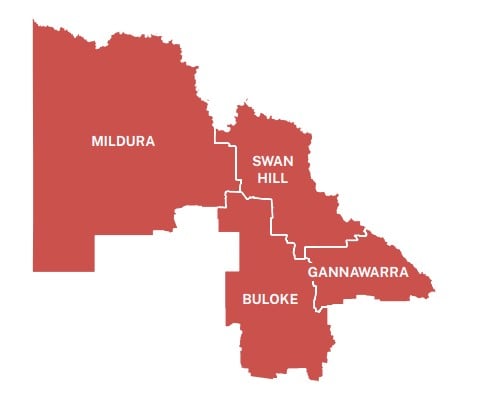
The Mallee region is home to the Latji Latji, Ngintait, Nyeri Nyeri, Wotjobaluk, Jaadwa, Jadawadjali, Wergaia, Jupagalk, Barengi Gadjin, Dja Dja Wurrung, Taungurung and Yorta Yorta Nations. First People of the Millewa‑Mallee, Barengi Gadjin Land Council, Wamba Wemba and Yorta Yorta Nation Aboriginal Corporations are the region’s Registered Aboriginal Parties.
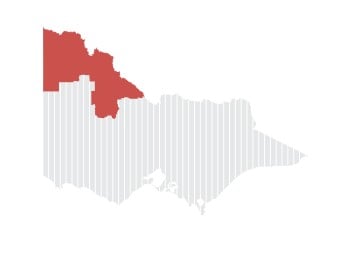
Bordered by New South Wales to the north and South Australia to the west, Mallee is home to some of Victoria’s most remote communities. The Murray River runs along the northern border of the region and is vital to the region’s economy and cultural identity.
Agriculture and related industries, such as food and beverage manufacturing, are engines of economic activity. Areas close to the Murray are known for producing horticultural goods like fruit, citrus, nuts and grapes. Inland areas focus on dryland farming for commodities such as grains. Tourism, transport and logistics, retail and health and community services are also key industries, with emerging industries including renewable energy generation, aquaculture, mineral sands mining and recycling.
The Mallee Drought Resilience Plan was produced collaboratively by a wide range of local residents, groups and organisations. A Drought Resilience Reference Group was established to steer the Plan’s development. The group included the First People of the Millewa Mallee Aboriginal Corporation and key stakeholders with expertise in agriculture, regional development, water, governance, community and natural resource management.
Implementing activities in the Mallee
Mallee Catchment Management Authority (CMA) is the Phase One Plan Coordinator for the Mallee region receiving a $380,000 Implementation Grant to coordinate and deliver resilience building activities across the region.
Mallee CMA are delivering 6 activities due for completion in the second quarter of 2026.
Activities underway include:
- Strengthening connection and active hope – Building understanding of the Mallee Looper caterpillar – enhancing community-led capacity and tri-state collaboration through existing biodiversity networks, engaging citizen scientists, and sharing findings through community events, with a focus on the emerging environmental threats of the Mallee Looper caterpillar.
- Supporting the Mallee Pulse – creating online resources (e.g. videos, webinars and fact sheets) for pulse growers and agronomists to manage production risks before and during drought. Advanced visualisation tools (e.g. 3D modelling and 360° virtual tours with interactive hotspots to aerial imagery) will also be used to engage audiences. Resources will be on the Frontier Farming website.
- Information hub to build drought resilience on farms in the Victorian Mallee – establishing a dedicated drought resilience information hub on the SoilsConnect platform and consolidating existing soil management resources relevant to the Mallee.
- Supporting Mallee dryland farmers to develop resilient business by measuring the impact of climate variability and drought on whole farm profitability and risk – engaging Mallee farmers and consultants by using the @RISK modelling tool, to conduct seasonal economic risk analysis of two virtual farms that reflect local dryland farming systems. The activity will generate insights into whole farm profitability under seasonal variability, enhance decision-making, and strengthen connections between agronomic and financial advisors in the region.
- Mallee Mates Working Dog School II – engaging farmers experiencing stress, loneliness, and isolation through a working dog school program in Ouyen, facilitated by mental health and wellbeing coach Kelly Barnes (2020 AgriFutures Rural Women’s Award VIC winner). The program will foster social connection, promote wellbeing, and increase awareness of local support services, while strengthening bonds between farmers and their working dogs.
- Expanding SoilHub.com.au to enable paddock-scale soil management and mitigation – addressing critical knowledge gaps in managing soil variability within Mallee paddocks by demonstrating how different soil types respond to drought and site-specific soil management practices. Using immersive digital tools, field demonstrations, and expanding the existing SoilHub platform, farmers will gain practical, paddock-scale solutions.