Bee nests are more than just homes for bees – they’re vibrant microbial ecosystems. The bacteria and fungi living in bee nests, bee bodies, and their food play essential roles in nutrition, disease resistance and overall colony health.
When bees gather nectar and pollen, they also pick up microbes from flowers, soil, and water. These microbes end up in the nest, where they interact with wax, resin, and stored food to create a miniature ecosystem. In honey bees, stingless bees, and even solitary species, these microbial communities help keep the hive healthy – but they’re highly sensitive to environmental changes.
Fermentation and food quality
Microbes are vital in making and preserving bee food. Bee bread, for example, is more than stored pollen – it’s a fermented food transformed by yeasts and lactic acid bacteria. This fermentation lowers the pH, breaks down nutrients, and creates antimicrobial compounds that protect against spoilage.
Honey preservation differs between species. European honey bees reduce water content to prevent fermentation, but stingless bees maintain higher moisture and rely more heavily on microbial fermentation. This helps explain why stingless bee honey has different taste and antimicrobial properties.
Microbes inside and out
Inside the bee, gut microbes help digest pollen, detoxify chemicals from plants, and support immune defences. Social bees like honey bees and bumblebees tend to have more consistent gut microbes, while solitary bees pick up more microbes from the environment. On the outside, microbes on the exoskeleton can help fight off pathogens – a natural protective layer that also varies with habitat and behaviour.
Unfortunately, these helpful microbes are easily disrupted. Pesticides, especially glyphosate and some fungicides, have been shown to reduce microbial diversity in bee guts and stored food. Antibiotics used in hives can also kill beneficial bacteria. Even habitat loss and poor floral diversity can starve bees of the environmental microbes they need.
Our recent research shows that even mild stress can lead to major shifts in microbial communities, reducing honey’s antimicrobial power and weakening gut health. These changes can ripple through the colony, making bees more vulnerable to disease.

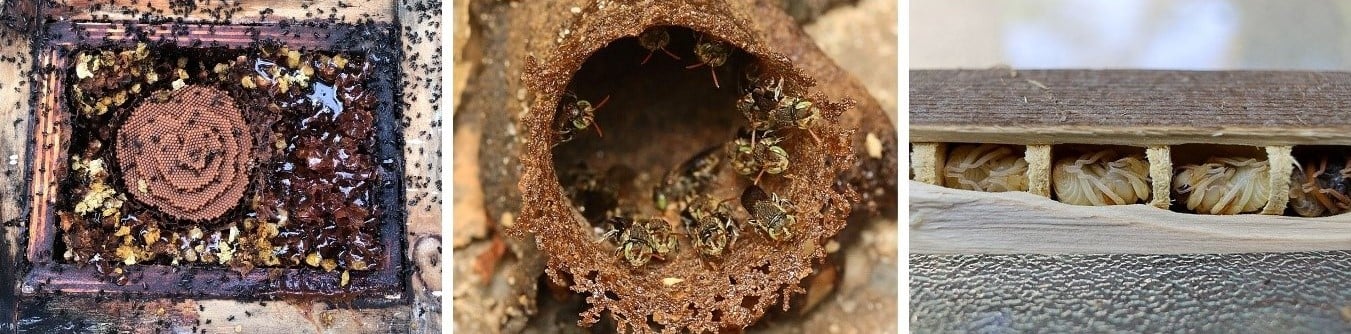
Diverse bee nest architecture supports a unique array of microbes. Clockwise from top left: managed Apis mellifera hive (photo by Ivan Radic, CC BY 2.0), wild Apis cerana nest in China (photo by CBCGDF, CC BY 4.0), wild Dasypoda hirtipes ground nest in Germany (photo by Dellex, CC BY 4.0), managed Tetragonula carbonaria hive in Australia (photo by Kenya Fernandes), wild Nannotrigona testaceicornis nest in Brazil (photo by Carlos Raposo, CC BY 4.0), wild Xylocopa sp. wood cavity nest in the United States (photo by Thom Wolf, CC BY 4.0).
What can beekeepers do?
Supporting a healthy microbiome starts with the basics:
- Provide floral diversity for better nutrition and microbe exposure
- Reduce chemical use where possible
- Maintain hive hygiene and avoid unnecessary antibiotics
Some researchers are trialling probiotic supplements for bees, with promising early results. But prevention through habitat, forage, and smart management remains key.
Understanding your hive’s microbiome may be the next frontier in keeping your bees thriving. As research expands beyond honey bees to wild and native species, the message is clear: healthy bees need healthy microbes.
Acknowledgements:
- NSW Bushfire Industry Recovery Project Website: https://www.nsw-bushfire-recovery.com/home
- Fernandes KE. (2025). Microbial allies in bee nests. Microbiology Australia, 46(2), 87-90. doi: https://doi.org/10.1071/MA25025
- This article was peer reviewed by Ros Gloag and Nadine Chapman.