What difference does animal breeding make?

2022-08-04T11:10:39+10:00Breeding, Genetics, Plan Bee|

A breeding program for Apis mellifera carnica has been ongoing in Germany since the 1970s, expanding into surrounding countries. From 1970-1989 the program increased honey production by 0.11% and gentleness by 0.01% per annum (Table 1). Table 1. Rate of genetic improvement per year before (1970-1989) and after (2014-2018) implementation of modern animal breeding techniques (EBVs). Hoppe et al 2020. In the mid 1990s the program implemented the use of modern animal breeding techniques - computer based Best Linear Unbiased Predictions (BLUP) which take information on traits, genetics (pedigree or genetic testing), and environment (i.e. which animals are kept together in the same environment) to produce Estimated Breeding Values (EBVs). EBVs assign a number to each individual that [...]
How do I take samples for Plan Bee?

2022-07-04T12:18:41+10:00Breeding, Genetics, Plan Bee|

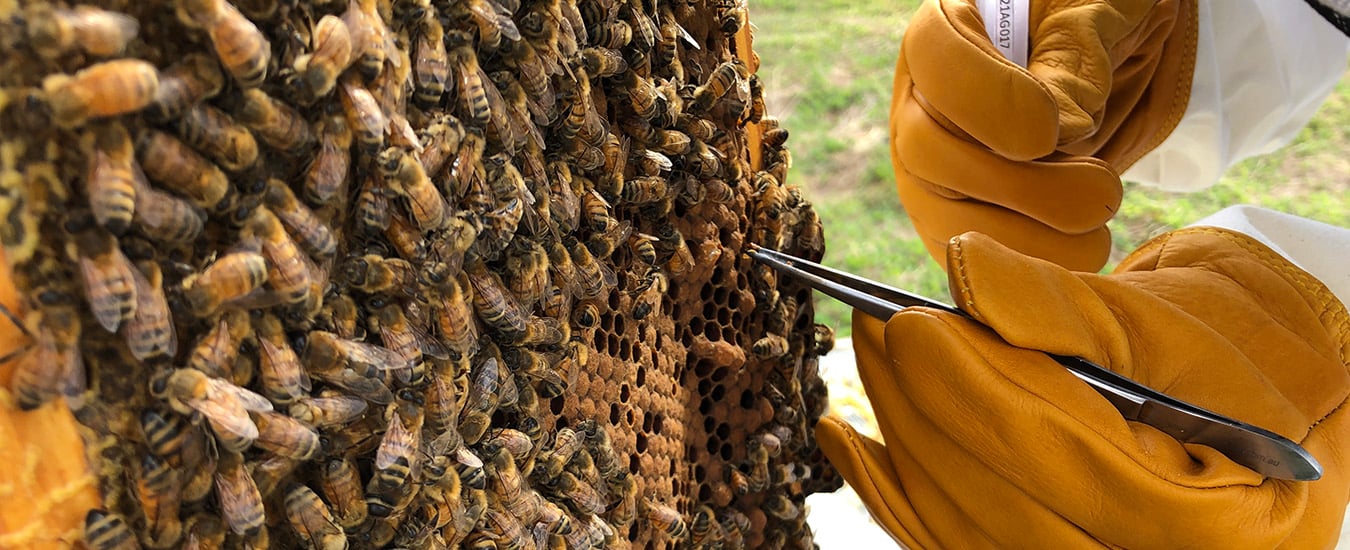
Our national honey bee genetic improvement program, Plan Bee, is offering free genetic testing to bee breeders who are collecting performance data. This includes not only commercial queen breeders, but also those who breed queens for themselves.  What does sampling for genetic testing entail? What do you collect? There are several options, which will give us the data we need. In order of preference these are: 6 drone pupae 6 large drone larvae Less than 6 drone pupae or large larvae 1 worker pupae 1 large worker larvae We’ve found that the closer the bee is to emergence the better the quality of the DNA we get. If using larvae, we ask for larger larvae as we need a certain [...]

A look into the sex-determining gene in Australian honey bees

2022-06-01T14:35:47+10:00Breeding, Genetics, Plan Bee|

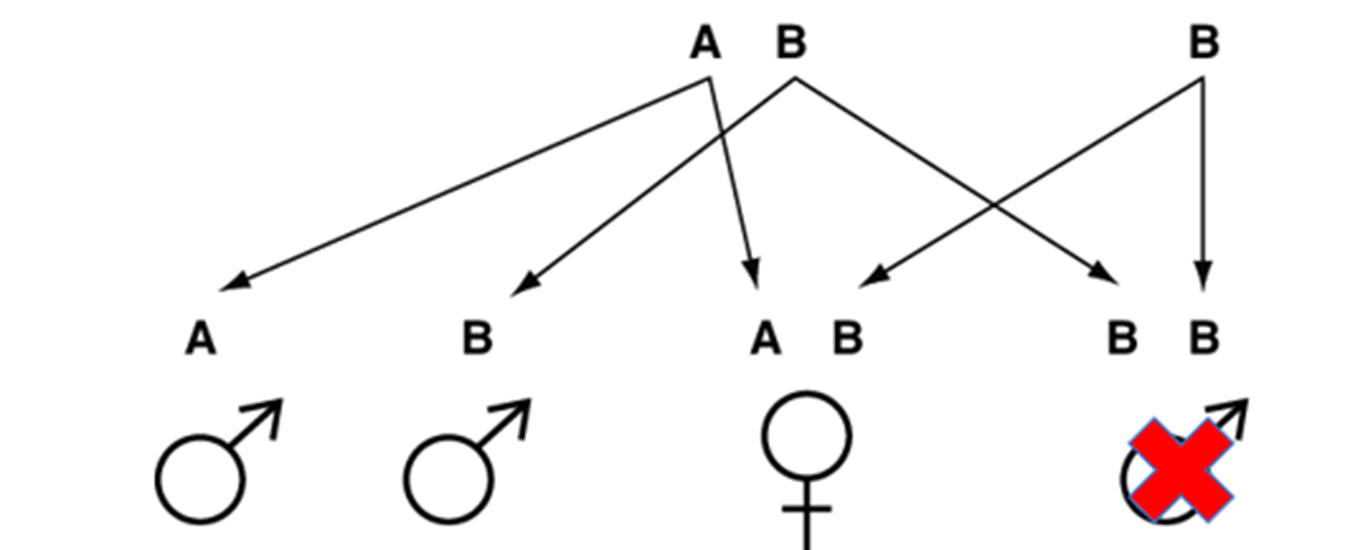
What is the complementary sex determiner and why does it matter? Sex in honey bees is determined by a gene named the complementary sex determiner (csd). Unfertilised eggs emerge to become drones, whilst fertilised eggs become queen and worker bees. Like other genes, csd has numerous alleles. Alleles are different variations of the same gene. A queen bee has two chromosomes, each carrying a different csd allele. As drones emerge from unfertilised eggs, they only carry one csd allele from their queen mother. Worker bees will carry one of their queen mother’s allele and a different allele from their drone father.  With this system, it is possible that some fertilised eggs end up with the same csd allele from both [...]

Controlled Breeding: Artificial Insemination of Queen Bees

2020-09-18T13:57:06+10:00Breeding, Genetics, Managing your hives|

The unique mating system of honey bees makes it incredibly difficult for beekeepers to accurately determine the fathers of their colonies. Virgin queens mate with approximately 30 drones at sites called Drone Congregation Areas (DCAs), which are open areas surrounded by trees. Drones fly from around 3.75km radius from the DCA. Any colonies within that area, either managed or feral, could contribute drones to the genetics of the colony headed by the now mated queen. When trying to select for certain traits, this becomes problematic. To get around this, scientists in the early- to mid-20th Century developed artificial insemination of queens. By selecting the mother colonies of the drones contributing to the insemination, scientists and beekeepers could now have much [...]

Genetics of Australian honey bees

2020-09-18T13:51:45+10:00Genetics|

The English black bee (Apis mellifera mellifera) was first introduced to Australia in 1822. Lugurian (A. m. ligustica) bees arrived in the early 1860s, Caucasian (A. m. caucasica) in the 1880s and Carniolan (A. m. carnica) in the 1890s. Lesser known imports were made of A. m. iberiensis, A. m. intermissa, A. m. lamarckii, A. m. cypria, A. m. syriaca. It is possible that other subspecies were also introduced; genetic studies have identified A. m. macedonica, although there is no historical report of their introduction. Honey bees have been divided into at least 5 ancient lineages, as discussed in a previous article. An AgriFutures Australia study created a genetic test to determine honey bee ancestry to 3 of these ancient [...]

Genetic evaluation of Australian honey bees

2020-09-18T13:51:30+10:00Breeding, Genetics, Managing your hives, Pests and diseases|

An AgriFutures Australia project by Robert Banks and Vinzent Boerner of the Animal Genetics and Breeding Unit, a joint venture between NSW Department of Primary Industries and the University of New England, investigated the utilisation of genetic evaluation in Australian honey bees. These methods are applied to most livestock and many plant industries world-wide. Genetic selection methods have now been used in honey bees in numerous countries throughout the world.  A grid can be used to estimate the area of brood or pollen Genetic evaluation relies on the collection of performance and pedigree data.  Performance can be measured in numerous ways: honey production, population strength, disease, gentleness, hygienic behaviour, swarming frequency and royal jelly production, as examples.  Pedigree [...]

Kangaroo Island bees

2020-09-18T13:46:44+10:00Genetics, Uncategorized|

You have probably heard that the honey bees of Kangaroo Island in South Australia are a special breed of ‘Ligurian’ Italian bees. Liguria is the coastal region of Italy nearest to France and Monaco. History has it that Black Bees, likely from England, were introduced to Kangaroo Island in the early 1800s. Italian bees were introduced much later in the 1880s. Some of these latter introductions came directly from Italy and indirectly via Brisbane. The bees from Brisbane may have mated with Black drones, which were common all over Australia at the time. The ‘Ligurian Bee Sanctuary’ was proclaimed in 1885 by an Act of the South Australian parliament, in order to maintain the purity of the Italian bees on [...]

How is Plan Bee different from previous breeding programs?

2020-09-07T13:41:10+10:00Breeding, Managing your hives, Pests and diseases, Plan Bee, Pollination|

Our national honey bee genetic improvement program (Plan Bee) seeks to create a sustainable breeding program using innovative technologies to transform the performance of honey bees in Australia. Many breeding programs have contributed to the industry, so how is this one different? The program is ‘decentralised’ We will breed queens at NSW DPI. However, we do not expect to supply all the queens needed by industry from this stock (nor do we want to). It may not be appropriate for a beekeeper in Tasmania to choose queens on the basis of how they perform in northern NSW. Different traits will be needed, and the queens may not perform as well in Tasmania as they did in NSW. Rather, we want [...]

Go to Top